HUD Releases 2020 HUD Statutory Loan Limits for Multifamily Housing

U.S. Department of Housing & Urban Development (HUD) has published updated Annual Indexing of Basic Statutory Mortgage Limits for Multifamily Housing Programs and its Annual Revisions to Base City High Cost Percentage.

HUD insured loan programs offer long term, low interest rate financing for new construction and permanent financing for qualifying affordable housing and market rate apartment projects.  The popular Section 221(d)4 and 223(f) multifamily loan programs offer loan amounts up to 85%-90% LTV / LTC (80% for cash-out refinances) supported by a 1.176x – 1.11x DSCR.  However, loan proceeds available under these programs are subject to HUD’s statutory per unit lending limit caps.

The following are the published Basic Statutory Mortgage Limits for Calendar Year 2020 for Section 221(d)4 and 223(f) loan programs:

221(d)4 Multifamily New Construction & Sub-Rehab
Bedrooms Non-elevator Elevator
0 $54,628 $59,010
1 62,013 67,649
2 74,959 82,262
3 94,085 106,418
4+ 106,314 116,817

223(f) Multifamily Purchase or Refinance
Bedrooms Non-elevator Elevator
0 $54,892 $64,026
1 60,807 70,944
2 72,633 86,990
3 89,525 108,951
4+ 101,352 123,193


The statutory mortgage limits serve to limit HUD’s exposure to an individual project by capping loan proceeds on a per-unit basis. Although most projects remain unaffected, HUD’s statutory mortgage limits are increasingly becoming a factor as interest rates and cap rates have come down which have pushed up market values and supportable debt. HUD’s statutory lending limits have not kept pace as annual statutory limit adjustments are based only on changes in the Consumer Price Index.  Statutory lending limit waivers have also become more difficult to obtain based on communications with HUD. 

Additional details are provided in the formal published notices linked to above. Contact Us for more information and to learn more about HUD loan programs.


Interested in learning more about FHA's attractive loan programs?
Click to learn more!

HUD Loan Programs


HUD Implements Debt Service Reserve Requirements on 223(f) Loans Due to Coronavirus (COVID-19)

U.S. Department of Housing & Urban Development (HUD) has just implemented debt service reserve requirements on 223(f) refinance and acquisition loans for existing multifamily properties in response to the economic instability and increased risk environment caused by COVID-19.  This requirement will remain in effect until such time HUD deems the associated risks mitigated.

Generally, under the new rules, a 9-month reserve will now be required on market rate projects and up to a 12-month reserve will be required on affordable projects. LIHTC projects with similar reserve facilities required by the tax credit investor that are available to cover the HUD loan debt service requirements may offset the HUD debt serve reserve requirement, subject to HUD approval on a case by case basis.  Projects with Section 8 project-based rental assistance covering greater than 90% of units will be exempt from the debt service requirement.  The debt service reserve will be eligible for release 6 months post-closing after the project achieves 3 consecutive months of underwritten debt service coverage.

Additional details are provided in the formal HUD publication: HUD Mortgagee Letter 2020-11.  Give us a call for more information or to learn more about HUD loan programs. 


Interested in learning more about FHA's attractive 223(f) refinance loan program?
Click to learn more!

223(f) Loan Program

FHA / HUD Eliminates 3-Year Rule Allowing for Refinances of Multifamily New Construction

U.S. Department of Housing & Urban Development (HUD) announced this week that it has revised its long-held policy requiring a three-year wait period following construction completion before accepting HUD-insured refinance applications for multifamily properties.  Under the new rules recently constructed multifamily properties are now eligible for a HUD 223(f) refinance upon achieving stabilization. 

Eligible properties must achieve the underwritten income and expense levels and debt service coverage ratio for a period of at least three consecutive months prior to closing.  Cash-out refinances have the additional limitation requiring a 50% hold-back until the project achieves six months consecutive performance at these levels.   The full details are published in Mortgagee Letter 2020-03. 

The HUD 221(d)4 loan has traditionally been one of best new construction/sub-rehab loans available in the market, with its long-term, low interest rate financing covering up to 90% of development cost.  However, its Achilles heel has been its Davis Bacon wage requirements along with longer processing time which have discouraged some developers. With the elimination of the 3-year rule for multifamily properties, conventionally financed developments can still benefit from HUD's attractive long-term, low interest rate financing.

Give us a call for more information or to learn how HUD loan programs can benefit your real estate investment. 

FHA Insured Loan Incentives for Qualified Opportunity Zone Projects

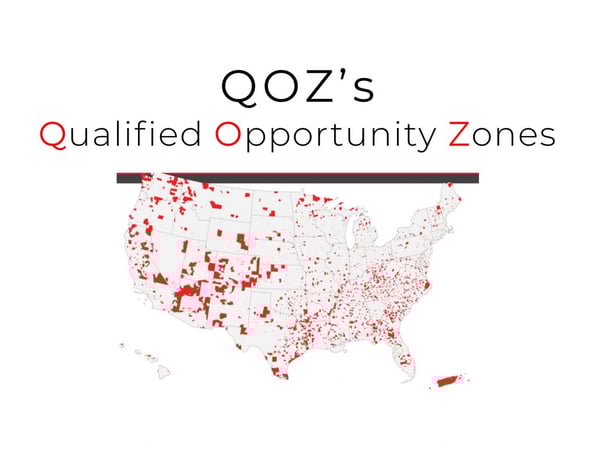
U.S. Department of Housing & Urban Development (HUD) wants to finance more qualified opportunity zone (QOZ) projects.

Real estate investors in QOZ’s already stand to benefit from the capital gains tax deferrals permitted under the Tax Cuts and Job Act of 2017.   With its latest Notice, HUD further sweetens the deal.

For FHA insured loan applications for projects located in QOZ’s, FHA application fees are reduced.   More importantly, HUD will assign its best and brightest to process such applications, all to improve the execution and expedite loan processing.

HUD’s Section 221(d)4 loan is already one of best new construction/sub-rehab loans available in the market with up to 90% loan-to-cost financing.  However, one of the major drawbacks with HUD insured financing has been its longer processing times.  Given the signal from HUD, we expect HUD to prioritize QOZ project loan applications and significantly improve on its processing timelines.

Give us a call for more information on these benefits or how HUD financing can benefit your real estate investment.

HUD Section 202 Supportive Housing for the Elderly Funds Now Available

U.S. Department of Housing & Urban Development (HUD) has issued a Section 202 Notice of Funding Availability (NOFA) for the first time since 2010. 

 Section 202 provides funding for the development and operation of supportive rental housing for income-qualified persons 62 years of age or older.  Under the program, eligible non-profit Sponsors can receive Capital Advance funds for the acquisition, construction, or rehabilitation of qualified senior housing projects along with a Project Rental Assistance Contract (“PRAC”) which provides rental subsidies for very-low income persons. 

 HUD is targeting projects that are at the forefront of design and service delivery and that will serve as a model for supportive housing providers within the industry. Accordingly, applicants need to demonstrate best practices and innovation in both physical design and supportive services. Proposals should promote the long-term physical and mental health and wellness of income-qualified elderly persons and the efficient use of government assistance. 

HUD has budget authority to award up to a total of $110 million.  Up to $50 million is available in this NOFA.  The remaining funds will be available in a second NOFA which HUD expects to publish in 2020.  The application due date is August 28, 2019.  Applicants are instructed to download the Application Package from Grants.gov and submit the application electronically. 

For more information, please feel free to give us a call.